OpenRGB's plugin system allows for limitless functionality


OpenRGB provides an expansive plugin interface allowing a wide variety of additional functionality to be added by plugins. Plugins can add additional functionality to the OpenRGB user interface and take control of your OpenRGB devices to provide synchronized effects, use your RGB devices as indicator lights for hardware statistics, integrate with third party lighting control software, schedule OpenRGB lighting profile changes, and more.


OpenRGB Effects Plugin

Synchronize your setup with amazing effects

OpenRGB Effects Plugin

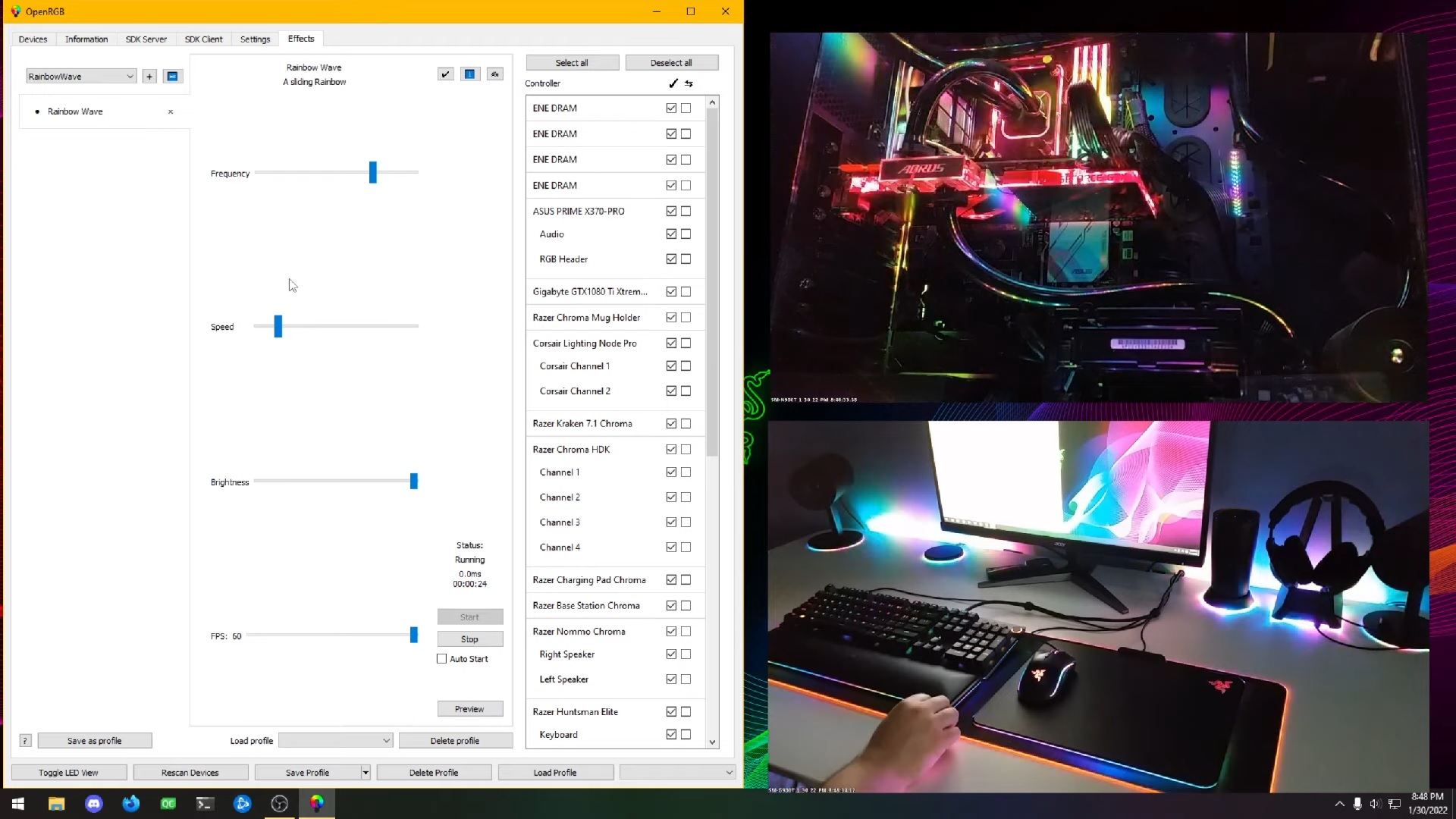
The OpenRGB Effects Plugin provides an extensive list of custom effects that can be synchronized across all devices that support Direct Mode. Many standard effects are available such as Rainbow, Visor, Breathing, and more. Advanced effects include several audio visualizations, Ambilight, GIF player, and a Shader renderer for using GLSL shaders as RGB effects.

More Info and Releases
OpenRGB Visual Map Plugin

Lay out your devices however you like

OpenRGB Visual Map Plugin

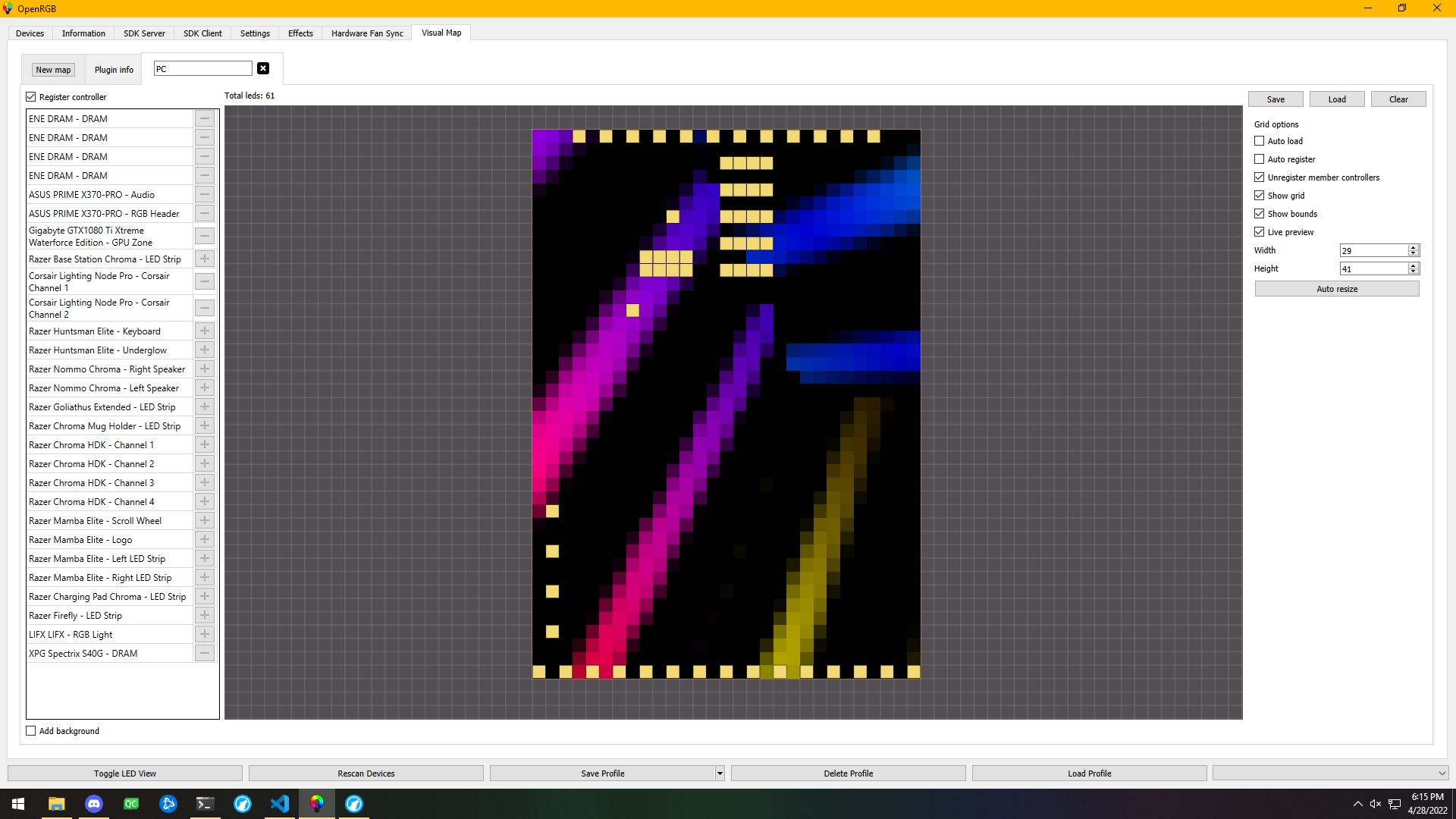
Normally, OpenRGB effects engines apply patterns one device at a time. With the Visual Map Plugin, you can combine one or more devices into a custom grid, allowing incredible effects to shine across your entire setup as one unified display.

More Info and Releases
OpenRGB Hardware Sync Plugin

Visualize system statistics with RGB

OpenRGB Hardware Sync Plugin

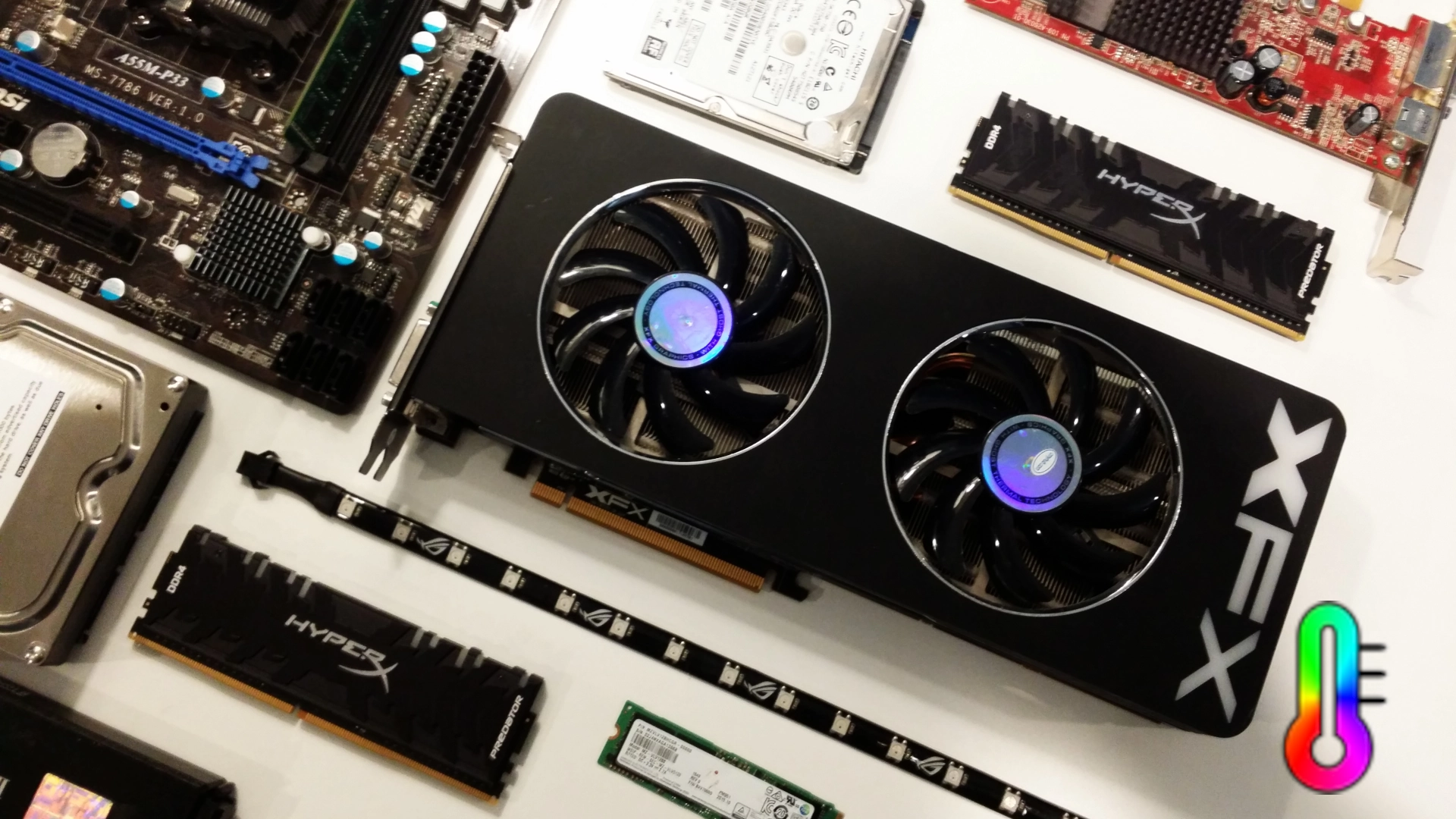
Want to keep an eye on your CPU and GPU temperatures while you're in game? The Hardware Sync Plugin will let you know if your temperatures are too high by changing the color of your RGB. Many more system parameters are supported as well, and multiple devices can indicate multiple measurements.

More Info and Releases
OpenRGB Fan Sync Plugin

Integrate fan control into OpenRGB

OpenRGB Fan Sync Plugin

Controlling all your RGB in one place is great, but what about your fan speeds? The Fan Sync Plugin takes care of that. Using the same backend as the Hardware Sync Plugin, the Fan Sync Plugin lets you map one or more system parameters to control fan speeds, including custom fan curves.

More Info and Releases

The Game Yify Today

: While praised for being user-friendly, YIFY releases were often criticized by enthusiasts for their low bitrates and lossy compression, which some argued compromised the visual depth of directors like Fincher.

While "The Game YIFY" is not a single academic or professional concept, it refers to the intersection of David Fincher’s 1997 psychological thriller and YIFY (later known as YTS ), one of the most prominent movie piracy groups in internet history.

: It explores the stripping away of a man's power and identity, a theme that resonates with the broader digital age’s struggle for privacy and control over one's own data and "reality." 3. Distribution Framework: The YIFY/YTS Phenomenon The Game YIFY

: The film is noted for its dark, atmospheric style and intricate twists, keeping audiences in a state of constant paranoia.

Paradoxes of Choice: Fincher’s The Game and the Legacy of YIFY Distribution : While praised for being user-friendly, YIFY releases

This paper examines the 1997 film as both a cinematic narrative of psychological control and a case study in digital distribution through the lens of the YIFY piracy group. It explores how the film's themes of manufactured reality parallel the curated, highly compressed digital environment created by YIFY, which revolutionized how "casual" audiences accessed cinema while sparking intense debate within technical communities. 1. Introduction: The Cultural Intersection

Below is a draft paper exploring this subject, focusing on the film's themes and the digital distribution legacy of the YIFY group. Distribution Framework: The YIFY/YTS Phenomenon : The film

remains a masterpiece of psychological tension, and its persistence in digital libraries like those once maintained by YIFY highlights a fundamental tension in modern media: the choice between high-quality preservation and universal, low-bandwidth access. Both the film and the group challenge our perceptions of what is "real" and "necessary" in our consumption of entertainment.