: Amazon Fresh and Whole Foods delivery are not available in all zip codes. AI responses may include mistakes. Learn more Grocery Delivery from Amazon
: While free delivery is often available for orders over a certain threshold, smaller orders may incur a delivery fee. how to buy groceries on amazon
: Best for bulk non-perishables like snacks, coffee, and paper products. You can use the Subscribe & Save feature to get discounts on recurring items. The Buying Process : Amazon Fresh and Whole Foods delivery are
: During checkout on the Amazon Order Review page, you will see an automated tip for the driver. A standard tip is typically 10%–20% of your order total. Pros and Cons Pros : : Best for bulk non-perishables like snacks, coffee,
: Syncs perfectly with Alexa for voice-activated shopping lists.
: If shopping in person at an Amazon Fresh store, the Dash Cart automatically scans items as you drop them in, allowing you to skip the checkout line.
: Choose a delivery window. Most services offer a "doorstep" option where you don't need to be home.
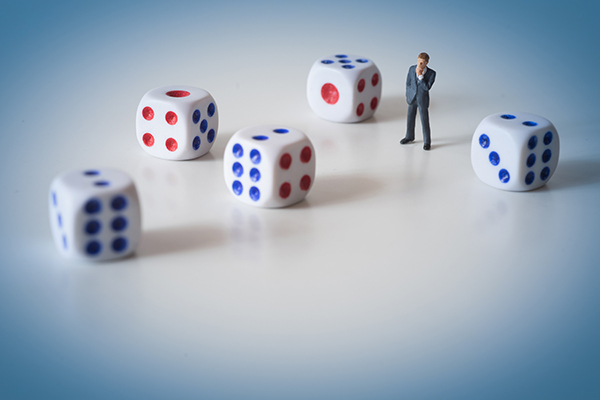
Probability calculations that can be used to inform decisions and manage risk can be very complicated. This unit is designed to help build your foundational understanding of probability and introduce you to some of the techniques that are used to calculate very difficult probabilities. You will continue to work with the Games Fair interactive tool and be exposed to real world situations to start to realize the impact of probability in your world.
The focus of this unit is on Probability Distributions. You will learn how to display all of the outcomes of a probability situation in a table and a bar graph. You will learn some formulas that will work with some situations. A large part of the unit will be calculating the expected value, or average, of a probability situation. The Games Fair Interactive tool will be used throughout the unit and will provide a focus for the summative and lead up to the Culminating Assignment, the Games Fair.
Probability calculations that can be used to inform decisions and manage risk can be very complicated. This unit is designed to help build your foundational understanding of probability and introduce you to some of the techniques that are used to calculate very difficult probabilities. You will continue to work with the Games Fair interactive tool and be exposed to real world situations to start to realize the impact of probability in your world.
After much work to collect valid and reliable information in the form of statistics, you will learn to analyse the statistics to make conclusions that can help make decisions. You will explore one real and two variables statistics using the World Map Interactive tool. A data set used will include a perceived quality of Health Care across Canada. The unit summative will be require you to act as a consultant for a large Canadian franchise to help them make a decision.

In Unit 3 of this course, you demonstrated how to represent the distribution of a discrete random variable. This unit will look at the distribution of continuous random variables and how they are compared to discrete variables. In the third and fourth activity, you will be introduced to what may be the most important mathematical function: the normal distribution.
In this unit, you will consolidate the concepts and skills you have learned throughout this course. You will complete the course culminating activity, through which you will analyze the impacts of energy transformation technologies on society and the environment.