vs
: Can feel slow due to heavy exposition and setup in the first half.
A good "Part 1" succeeds if it leaves you craving the sequel. If it feels like a giant trailer rather than a complete movie or book, it has failed its audience.
: Often delivers high production value (or rich descriptions) to hook the audience visually and emotionally. ⚠️ Weaknesses
Evaluating a first installment requires looking at how well it sets up a universe while functioning as a standalone piece of entertainment. 🌟 Strengths
To give you a precise and detailed review, could you tell me:
: Takes the time to establish deep backstories and clear motivations for the protagonists.
: Often ends on a cliffhanger, leaving the audience feeling unresolved or unsatisfied.
: Usually excels at introducing complex lore, unique settings, and cultural rules.
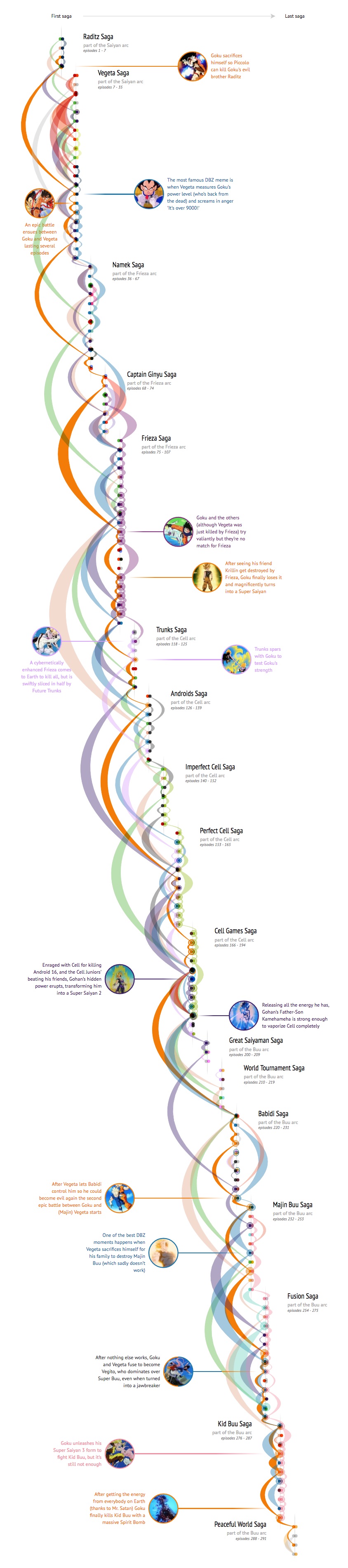
Extra interactivity on desktop The visual above is just an image, but on a large screen you see the full interactive and get the option to hover over each of the fights and character paths to see extra information about the fight; who was fighting whom, what was special about the fight and in what other battles did these characters fight.
Check it out behind your laptop / desktop as well for an even more detailed look into all fights that happened in Dragon Ball Z. ДЌasЕҐ 1
The fight info was taken from the Dragon Ball Wikia pages for each saga. For relevance, a few fights were taken out of the above visual; the Garlic Jr. and Other World Tournament filler sagas were completely removed. Also the ±5 fights that happened in the anime only and didn't feature any of the Z fighters, happened in a nightmare or flashback were taken out. : Can feel slow due to heavy exposition
Created by Nadieh Bremer | Visual Cinnamon : Often delivers high production value (or rich
Data from the very extensive Dragon Ball Wikia | Read about the design process in this blog